Aequus
Equitable health is an information problem before it is a technology problem.
Aequus is an AI-native health technology company. We build the trusted context and intelligence layer that helps health information move from source to decision: from regulated product information and global health infrastructure to clinical workflows, patients, populations and research.
- 01Source
- 02Context
- 03Action
One GS1 code, the right answer for whoever is holding it.
- Patients
- Pharmacies and hospitals
- Clinicians
- Care teams
GS1 Digital Link · the codes already printed on the pack
01Purpose
What we are for
02The cost
Why now
Health information loses its value as it moves across fragmented systems. The cost is measurable.
Sources: NIMHD, WHO, EUIPO, WHO and World Bank. Each figure stands alone; they are not summed.
Where information breaks
03Offering
TrueSource
Our main offering · Live
One GS1 DataMatrix code, the right answer for whoever is holding it. TrueSource is a fully managed resolver for regulated product information, built on the GS1 Digital Link standard. Every scan of a product, batch, serial or patient code goes to the verified destination for that code and for the person scanning it.
Every route carries compliance, security, content integrity and accountability built in. Each manufacturer or hospital runs its own isolated tenant, with its own data, keys, rules and audit trail, and signs in with its own identity provider. It works with the codes already printed on the pack, so nothing on the line changes.
What a scan does
A phone camera opens the approved leaflet for that exact pack, with nothing to install.
A scan flags a recalled batch, a suspected counterfeit or a serial that does not match its batch.
Provider links open prescribing and dosing information meant for professionals.
A patient wristband scan goes through an authenticated gate. Patient records are never public.
How it is offered
04Clinical AI
Halo
One secure fabric, four applications.
A secure, standards-based clinical AI platform that extends the record rather than replacing it, bringing context to the point where care is decided. TrueSource proves the thesis closer to the source. Halo proves it closer to care.
For patients. Guidance grounded in their own record, in their own language.
For population health. Proactive risk stratification and care-gap closure between visits.
For community. Culturally fit care and social-needs follow-through from clinic to community.
For research. Privacy-preserving cohort discovery and governed research access.
05Products
Alongside it
What is live today and what is on its way.
06Proof
Measured, not claimed
From our own test runs on held-out cases, August and September 2026.
Errors caught on held-out cases, the ones a model quietly gets wrong.
07Principles
What we hold to
Principles guide how we behave. Pillars decide what we build, and what we refuse to.
The three pillars
Can people trust and use what they are given? Credible source, accurate content, relevant meaning, timely delivery.
Does the data carry what it means? Provenance, population, place, point of care, purpose, versioning and audit.
Who does this serve, and who helped design it? Solving one problem must not shift the burden onto someone else.
Every solution has to answer all three. If it only answers one, we do not build it.
08Story
Our story
Built from shared work, then a shared conviction.
- At Google
The co-founders worked across Google health and cloud, bringing complementary perspectives in clinical strategy, health equity, policy and technology.
- A shared project
Their paths converged on a Harvard-connected project supporting a Google Cloud client and a real health-system challenge.
- Aequus takes shape
After leaving Google, they came together around one conviction: build a company with equity, integrity, context and measurable value at the forefront.
09People
Our team
Our team has worked and studied at
- HARVARD
- YouTube
- COLUMBIA
- Pfizer
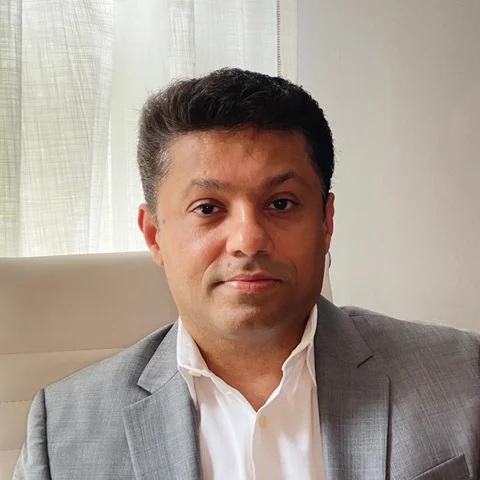
Health policy innovator leveraging augmented intelligence to eliminate health disparities and cure our fractured care systems.

“I have spent my career across clinical care, policy, and health technology. In the pandemic, I watched all three fail my own family, and I could name every place it broke. Now I do something about it.”

“I build the technology that carries trusted health information into as many systems, workflows and hands as possible, because equitable access is the whole point.”
10Markets
Where we work
Three markets we work in.